By Winter Johnson
For 70-year-old Rodah Matimba, the women’s economic empowerment programme is not only a group of business partners but also a team of friends who are working together to fight a constant threat in Chawama: Hunger.
In the bustling compound of Chawama, Rodah is hard at work. Her days start early at 5 a.m. with a walk to her neighbour’s house to draw water for her home – where she lives with two of her children and six of her grandchildren – and a quick breakfast of porridge and groundnuts. After a bath for her youngest grandson, she straps him on her back and begins the 2.8-kilometre walk to HOPE worldwide Zambia’s site in Chawama, to take part in the day’s commerce at the local market.
With a wide smile and wise eyes, Rodah was happy to sit down and tell me about her experiences with the women’s economic empowerment programme in Chawama. In 2009, she saw some neighbourhood friends selling vegetables as part of the programme’s initiatives, and she was eager to join in.
Fast forward to today, and she is an active member of the women’s economic empowerment programme – selling homemade scones and groundnut powder in the market, packaging sugar for re-sale, selling her homegrown vegetables, and constantly brainstorming ways to “put food on the table”, as hunger and malnutrition are common. In fact, her veggies – onions, Chinese cabbage, and kale – are so in demand that they “sell out within minutes”, according to Rosemary Chama, the site assistant for the Chawama location.
Working together for food in Zambia
Rodah is one of 194 women who are members of the women’s economic empowerment programme, which runs across all four HOPE worldwide Zambia sites in the city of Lusaka. Many women in the programme earn only an average of £11 to £15 per month, making the profitable skills learned in the programme – baking, tailoring, financial skills, literacy, sausage making, cooking, and more – all the more attractive.
As a long-time member of the women’s economic empowerment programme, Rodah remembers the food packages that she has received, consisting of beans, cooking oil, small fish, and mealie meal, which she would use to feed her family. She remembers all the times that the staff at the Chawama site would greet her grandson with a smile and a Maheu drink – which is made from corn and is used to boost his nutrition.
But among the many things that she is grateful for when she thinks of HOPE worldwide Zambia’s women’s economic empowerment programme is the camaraderie that she has found in the group: “When we come here to share ideas and learn things versus staying home doing nothing … we’re able to come together as women and share ideas on how we can provide for our families.”
The community vibe was clear even during this interview, as several members of the programme were quick to say hello, show off the clothing they were making for sale and tell me all about the shiny new groundnut powder machine.
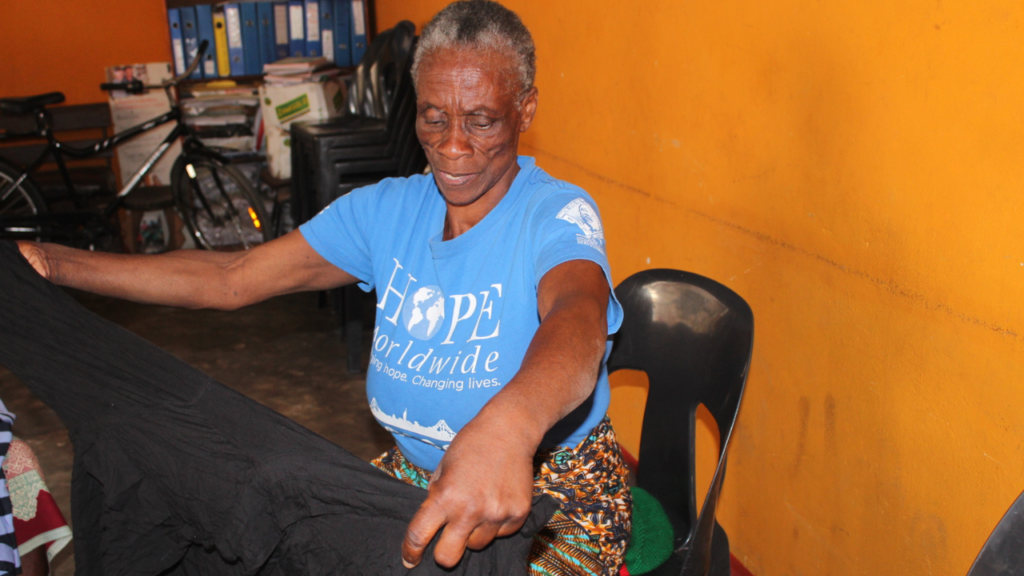
When asked what advice she would give to other women considering joining the programme, Rodah didn’t hesitate. “I would tell them about the benefits – that the programme will help them get the skills and the knowledge to take care of their families.”
As Rodah reflects on her journey, it’s clear that the programme has done more than just empower her economically – it has given her a partnership with other hardworking women who are determined to give their best to their families and to their communities. Together, they are proving that with the right support and shared determination, they can work toward overcoming their challenges and nurture a brighter future for themselves and others in the compound of Chawama.
Fast facts on the women’s economic empowerment programme in Zambia:
- 194 women are currently enrolled across the four HOPE worldwide Zambia sites (Chawama, Kanyama, Kalingalinga and Mtendere)
- 4000 women have been helped since the programme was launched in 2008